Table of Content
- Best Hong Leong Finance Home Loans
- Home price to income ratio is a good guide to how affordable your home is
- More From: Mortgage
- Biggest U.S. Metros, Ranked By Affordability
- New Study Reveals Growing Disparity Between Income and Home Prices Nationwide
- Highlight countries
- Is fixed rate home purchase loan the best for new property buys?
The price-to-income ratio reached its peak around the 2008 financial crisis with 4.6 and dropped to 4.0 in 2017. Home prices in the South were consistent with household income increases until the 2000s when the market became unstable. Home values and household income both dropped precipitously as a result of the 2008 financial crash. Since then, the real estate market has rebounded and then some, with home values going from a post-crisis low of $298,910 to $374,900 in 2021.

However, the growth rate of home prices is 4.2 times more than the growth rate of household income, making the Northeast the second least affordable region. Today, the average U.S. home buyer is overextended, financially stressed, and has very little room for error. Since the last major housing market crash in 2008, the average house-price-to-income ratio has grown steadily worse.
Best Hong Leong Finance Home Loans
These values are not much higher than the healthy housing market average of 2.6. In 2000, the growth rate differences between home prices and household income were 17%, 13% and 23% for Charlotte, Columbia and Oklahoma City, respectively. By 2017, however, the same growth rate differences increased to 66%, 56%, and 82%, but household income couldn't keep up, causing these metro areas to be less affordable relative to prior years. The inland metros, Albany and Pittsburgh, are more affordable compared to their coastal counterparts. The price-to-income ratios of these metros were 3.2 and 2.6 in 2017, respectively.
PropTiger.com is an online real estate advisor that functions on the fundamentals of trust, transparency and expertise. As a digital marketplace with an exhaustive range of property listings, we know it is easy to get lost. At PropTiger.com, we guide home buyers right from the start of their home search to the very end.
Home price to income ratio is a good guide to how affordable your home is
The growth rates draw a similarly discouraging picture for homeownership in these metros. Since 1960 median household income grew by 59% and 56% in Seattle and Denver, respectively, whereas median home prices grew by 286% and 239%. According to City Lab, the rule used by top real estate agents is that you can afford a home equal to roughly 2.6 years of your household income, i.e., a 2.6 price-to-income ratio.
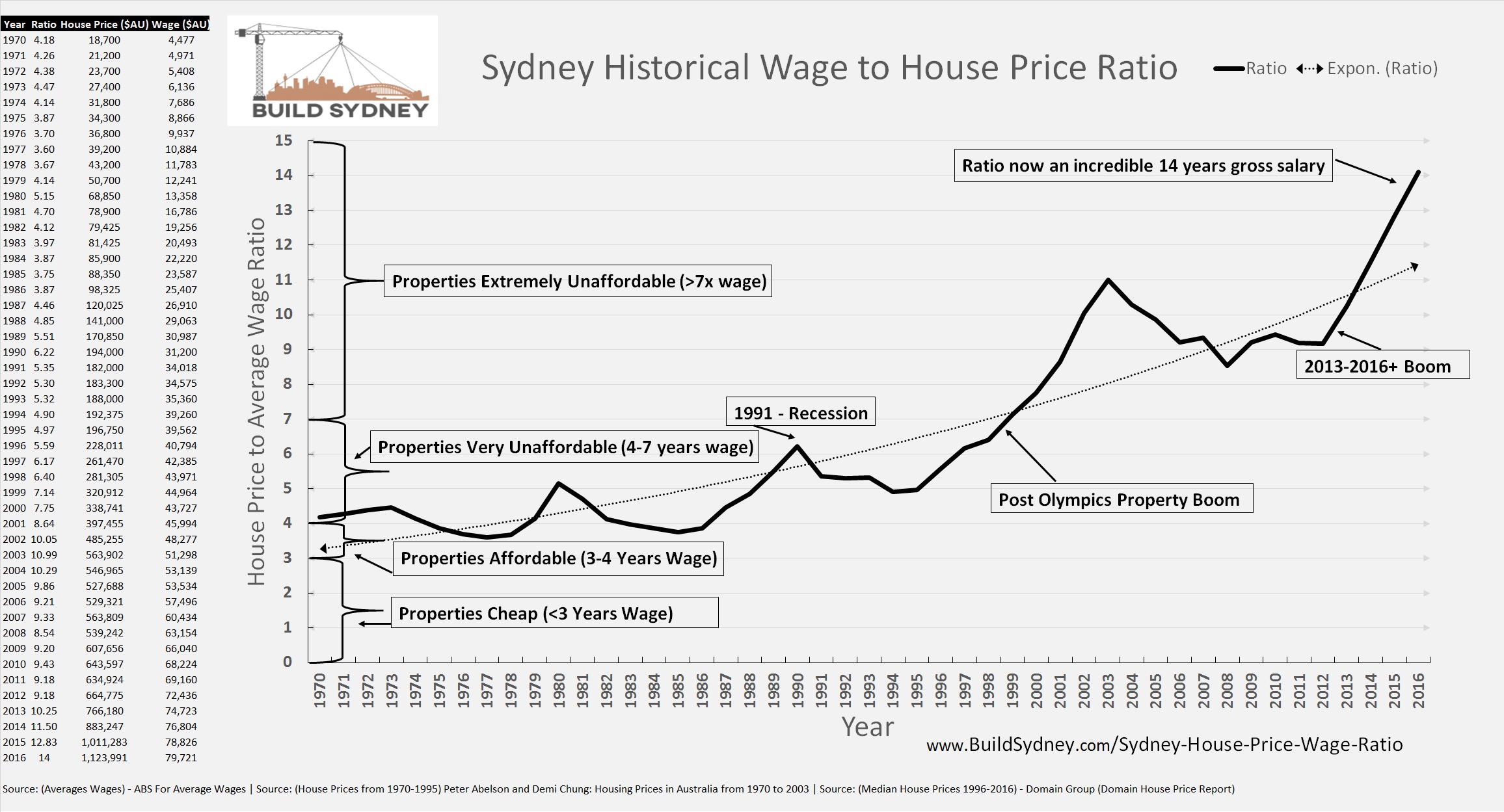
Over that same span of time, median household income has stayed nearly flat, going from $63,902 to $69,178 — a measly 8% increase. That means home prices have increased 3.1x faster than income since 2008. The discrepancy between the growth rates of home prices and household income has been climbing in the Midwest since the 1990s; however, the discrepancy is not as large as it is in other regions. From 2000 to 2017, median home prices showed an increase of 29%, whereas median household income showed a decrease of 1%. Still, the growth rate difference between home prices and household income in 2017 is half of the difference observed for the Southern region and a quarter of the difference observed for the Western region.
More From: Mortgage
This chart gives a different view of the data from the chart above, comparing the percentage change between UK house prices and average incomes over time. When considering a mortgage application, lenders look at your front-end ratio. Your front-end income ratio measures how much of your gross monthly income would go toward a mortgage payment. Mortgage lenders say that a mortgage payment should not exceed 31percent of an applicant's gross monthly income. To figure your mortgage front-end ratio, multiply your annual salary by 0.31 and divide it by 12 months.

Homes are increasingly unaffordable, leading to unstable housing markets where demand can't meet supply. Median home prices have increased at four times the rate of household incomes since 1960, leading to imbalanced price-to-income ratios in most major metropolitan areas. The house price ratio in the United States fluctuated between 2012 and 2022. In the U.S., the index score in the first quarter of 2022 amounted to 136.3, which means that house price growth has outpaced income growth by over 36 percent percent since 2015. Rules vary for how much house you should buy based on a your yearly income.
The good news is that there are still many inland cities where homeownership is affordable. From 1960 to 2000, price-to-income ratios were around 2.6, making homeownership attainable during these years. Home prices jumped during the 2000s and kept steam through the housing crisis. Compared to the Western and Northeastern regions, the South does not show as much of a discrepancy between home prices and household income. By contrast, average home prices in the 10 metros with the lowest house-price-to-income ratio are 2.5x higher than income, up just 10% from the average of 2.3 in 2000. In 2000, the average home value was $271,707 in the 50 most populated cities.

The house-price-to-income ratio is a way to think about home prices relative to how much a buyer earns. Similar to the general rule that you shouldn’t pay more than a third of your income toward rent, experts suggest you stay close to a 2.6 house-price-to-income ratio in order to avoid financial discomfort. Overall, the inland metros represent more affordable conditions and even for the major coastal metros like New York City, there might be hope. Home prices in the West are increasingly out of line with household income, while only 16 out of the 100 most populated areas in the U.S. are below the healthy 2.6 price-to-income ratio.
According to Global Property Guide, in 2014, India's home price-to-income ratio was 758.61, when Indian income levels relative to a 100 sq mt upscale residence. In Singapore, the home price-to-income ratio in 2014 was 27.64 and in Malaysia it was 27.47. Is an interesting and valuable measurement of housing valuation and affordability. To use individual functions (e.g., mark statistics as favourites, set statistic alerts) please log in with your personal account.

According to Mike Maloneythis ratio is heavily influenced by interest rates. When interest rates go down the affordability of a house goes up, so people spend more money on a house. Interest rates have now been falling since 1981 when they peaked at 15.32%(for a 10-year US treasury bond). Mortgage payment is the calculated monthly principal and interest payment on a median-priced home with 20% down payment and 30-yr mortgage. As a rule of thumb, a home affordability assessment andbest home loans will put your heart at ease.You should also consider the services of mortgage loan experts as their services are always free. But regardless of if you are renting your first apartment or whether have been a homeowner for years, it can be difficult to ascertain how much you can afford to spend on housing each month.
Though residential property prices in the Netherlands have been on an upward trend since 2014, in August 2021, the annual house price appreciation reached the staggering 17.8 percent. In 2022 and 2023, the growth of house prices is forecasted to continue, albeit at a slower pace. From 2019 to 2021, the average house-price-to-income ratio increased from 4.7 to 5.4 — a 14.9% increase that's more than double the recommended ratio of 2.6. In other words, homes cost 5.4x what the average person earns in one year. Since 1965, home values have skyrocketed from $171,942 to $374,900 — a 118% increase. Meanwhile, median household income crept up by just 15%, from $59,920 to $69,178 in 2021-inflation-adjusted dollars.
Book and manage lawn care and landscaping services with the click of a button. Junk King provides eco-friendly and reliable junk removal.hauling services for businesses and residences. Shop custom-printed products, including yard signs, riders, banners, flags, business cards, and more. Purchase floor covering products for residential and commercial projects. To put it simply, houses are getting more expensive while people are making the same money.
Here are a few basic tips to help you figure out a monthly budget on housing, based on your income. It is calculated on an assumed 30 year loan, and the figure would rise if the loan tenure were shortened. Correspondingly, a working household may reasonably expect salary increases over time, and, assuming a fixed tenure period, the actual DSR in later years of repayment may fall. The problem with that is that in 2021, the average house-price-to-income ratio in the U.S. is 5.4, or more than double the recommended “healthy” ratio of 2.6.


No comments:
Post a Comment